Garden drainage in Stockwell
If you are dealing with a wet lawn, a muddy path, standing water after rain, or beds that never seem to dry out, garden drainage in Stockwell can make a real difference to how your outdoor space looks and works. In a busy South London area like Stockwell, gardens often need practical, well-planned drainage solutions that suit smaller plots, shared access, period homes, and modern developments alike. Whether you have a compact terrace garden, a rear courtyard, a communal outdoor area, or a larger family garden, proper drainage helps protect surfaces, planting, and the overall use of the space.
Local conditions matter. Stockwell gardens can be affected by heavy rainfall, compacted ground, older boundary walls, and limited access for equipment and materials. Water may pool in low spots, soak into clay-heavy soil slowly, or run toward the house rather than away from it. A tailored drainage plan can reduce waterlogging, support healthier planting, and make patios, lawns, and access routes safer and more usable all year round. If you are looking for a local team that understands the layout and constraints of Stockwell properties, you are in the right place.
Good drainage is not just about removing water. It is about creating the right balance between soil, surface levels, channels, and soakaway options so your garden can cope with regular rainfall without becoming messy or damaged. From simple surface water improvements to more involved drainage installation, the right approach depends on the site. Request a free quote if you want practical help planning a solution that fits your garden, your property, and your day-to-day needs.
Why garden drainage matters in Stockwell

Stockwell is a built-up part of London where many homes have back gardens that are not especially large, but still need to handle a surprising amount of water. When rainwater has nowhere to go, it can collect on lawns, patios, and paved areas, making the space unusable and sometimes causing longer-term damage. In a local setting, drainage problems can become more than a nuisance: they may affect the condition of fencing, retaining edges, paths, sheds, and planting beds.
For many residents, the first signs are easy to recognise. You may notice soggy patches that never really dry, turf that feels spongy underfoot, moss building up on hard surfaces, or water running back toward the house after a downpour. In some gardens, the issue is worse around extensions, side returns, or newly paved patios where original ground levels have been changed. Garden drainage in Stockwell is often about solving these everyday problems before they lead to structural or surface deterioration.
It also matters for how you use the space. A garden that stays wet can stop children playing outside, make it harder to keep pets clean, and leave furniture, pots, and planters sitting in damp conditions. For landlords, tenants, homeowners, and commercial premises with outdoor areas, drainage issues can quickly become a maintenance headache. A well-designed system can restore the usability of the garden and help prevent repeated repair costs.
Common drainage problems in local gardens

Different Stockwell properties tend to experience different drainage patterns, but a few issues come up again and again. Some gardens suffer from surface water pooling, especially where the ground is flat or the soil has become compacted over time. Others have poor runoff because paved areas slope the wrong way, pushing water toward the property rather than guiding it safely away. In some cases, older drainage routes have been blocked, damaged, or simply are not adequate for the current layout.
Clay-rich soil is another common factor. Clay holds water for longer, so even a moderate amount of rain can leave a garden saturated. Add in hard landscaping, raised beds, or poorly planned paving, and the problem becomes more visible. Gardens that have been reworked over the years may also have layers of different materials beneath the surface, which can interrupt natural drainage and make water collect in unexpected places.
Commercial customers in and around Stockwell may face additional issues. Small courtyards behind cafés, offices, salons, and rental properties often need drainage that handles foot traffic, cleaning water, and rainfall without creating trip hazards or damp patches. When drainage fails in these settings, it is not just inconvenient; it can affect safety and presentation.
Services for garden drainage in Stockwell

A proper drainage service starts with understanding the site. That can include assessing the slope, checking where water currently gathers, reviewing soil type, and looking at how the garden is used. From there, a local team can recommend a solution that fits the conditions rather than using a one-size-fits-all approach. Common options include drainage channels, soakaways, regrading, French drains, land drainage, and improved surface water management.
In many Stockwell gardens, a combination of measures works best. For example, a patio might need discreet channel drainage to collect surface water, while a lawn at the rear may benefit from a French drain or a soakaway to reduce saturation. If the ground falls the wrong way, regrading may be necessary so that rainfall naturally moves away from the property and toward a suitable drainage point. Practical planning is key because each element of the garden affects how water behaves.
There are also cases where the best answer is to improve the surface itself. Replacing impermeable materials with more permeable options, adding gravel strips, or redesigning borders to help absorb runoff can all make a meaningful difference. The right solution depends on whether the priority is a lawn, a planting area, a paved entertaining space, or a mixed-use garden. A skilled local contractor should be able to explain the options clearly and help you choose what makes sense for your home or business.
Typical drainage solutions
- French drains for persistent wet soil and lawn waterlogging
- Soakaways for collecting and dispersing rainwater underground
- Channel drains for patios, driveways, and paved paths
- Regrading and levelling to improve natural runoff
- Permeable paving or improved surface finishes
- Subsurface drainage for planting beds and problem areas
What is included in a local drainage service

Customers often want to know exactly what happens when they book garden drainage in Stockwell. A reliable service should be straightforward, transparent, and suited to the site. It usually begins with an inspection of the garden and the problem areas, followed by a practical explanation of likely causes and suitable options. The aim is to identify the underlying issue, not just mask the symptoms.
Depending on the job, the service may include excavation, removal of excess soil or spoil, installation of drainage pipes or channels, connection to a soakaway, and reinstatement of the ground or surface afterward. In many cases, the work also involves checking falls and levels so that the finished result performs properly during heavy rain. If hard landscaping has been affected, repairs or adjustments to paving, edging, or turf may also be needed to complete the job cleanly.
For larger or more complex spaces, the plan may need to account for neighbouring boundaries, planting areas, access routes, or shared outdoor areas. In Stockwell, that kind of flexibility matters. Garden drainage solutions often have to work around tight spaces, neighbouring properties, and practical day-to-day access. A good local team will aim to complete the work efficiently while keeping disruption to a minimum and leaving the garden tidy and usable.
What you can expect from the process
- Initial assessment of drainage issues and garden layout
- Recommendation of suitable drainage methods
- Clear explanation of the work required
- Installation or improvement of drainage components
- Testing or visual checking of water flow where appropriate
- Reinstatement and tidying of the area
How garden drainage work is planned
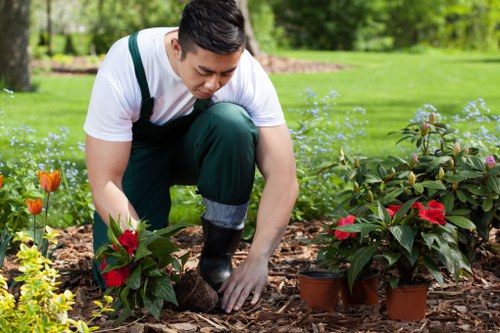
Every property is different, but most successful drainage jobs follow a similar planning process. First, the garden is assessed in relation to the house, surrounding buildings, boundaries, and any existing hard landscaping. Then the likely path of water is considered. Water always takes the easiest route, so the job is to create a better route than the current one. That may involve collecting water before it pools, moving it to a better area, or increasing the soil’s ability to absorb it.
The next step is choosing the right method. A small courtyard with frequent standing water may need a compact channel drain and a local soakaway. A lawn with poor drainage may need trenching and a French drain to move excess water away from the root zone. A garden with incorrect levels may need earthworks so the surface gently falls toward a suitable outlet. The best solution is the one that suits the garden rather than the most complicated one.
Once the plan is agreed, the work can usually be scheduled with attention to access, spoil removal, and reinstatement. In Stockwell, access can be a real consideration, especially where properties have narrow side returns, limited rear access, shared walkways, or parking restrictions nearby. That is one of the reasons a local company is useful: it is easier to plan around the realities of the area and avoid unnecessary delays or disruption.
Why planning matters
- It reduces the chance of repeat waterlogging
- It helps avoid unnecessary excavation
- It improves the lifespan of lawns, paving, and borders
- It makes the finished garden easier to maintain
Residential drainage for Stockwell homes
Many local homeowners contact a drainage specialist after noticing that part of the garden never dries out. In terraced homes, this can happen in rear gardens where the space is narrow and enclosed on several sides. In flats and converted properties, shared outdoor spaces can also suffer from poor runoff, especially if the ground has been altered during previous landscaping work. Residential customers usually want a solution that improves everyday use without turning the garden into a building site.
That is why a careful, minimally disruptive approach is important. A family garden may need the grass restored after drainage works, while a courtyard may need paving to be lifted and relaid neatly. In some cases, the homeowner may only want a small but effective improvement, such as fixing a puddling problem near the patio door or reducing water sitting beside a fence line. Even targeted work can make a noticeable difference.
Stockwell residents often value practical results: less mud, fewer slippery patches, and a cleaner outdoor area that can be used more often. If you are planning to improve your garden for entertaining, planting, or simply easier maintenance, drainage should be considered early rather than added as an afterthought. A well-drained garden is easier to enjoy and easier to look after.
Residential signs that drainage needs attention
- Water remains on the lawn or patio long after rain stops
- The soil smells sour or stays soft and muddy
- Plants struggle in certain areas despite regular care
- Paths and paving become slippery with algae or moss
- Water collects against the house, shed, or retaining edge
Commercial and landlord drainage needs
Garden drainage in Stockwell is not only for private houses. Commercial premises, rental properties, and shared outdoor spaces also need proper water management. A landlord may want to reduce maintenance callouts linked to standing water, while a business owner may need outdoor customer areas to stay dry and presentable. Small courtyard gardens behind offices, nurseries, clinics, or hospitality venues can become slippery or messy very quickly when drainage is poor.
For these customers, the priorities are often reliability, safety, and minimal disruption. Work may need to be timed around business hours, tenant access, or cleaning schedules. In some cases, the aim is to improve drainage without changing the look of the outdoor area too much. That might mean discreet channel drains, improved falls, or a hidden soakaway solution that keeps the space neat while solving the water problem.
Landlords also benefit from drainage improvements because recurring dampness can contribute to complaints, maintenance costs, and wear on surfaces. A properly drained garden is easier to hand over, easier to keep in good condition, and less likely to cause avoidable issues after rain. If outdoor space is part of the property’s appeal, drainage should be part of the plan.
Why choose a local company in Stockwell
Choosing a local team for drainage work has practical advantages. A company that regularly works in Stockwell is more likely to understand the area’s property types, access patterns, and typical garden layouts. That local experience can help when planning how to get materials in and out, how to protect surfaces, and how to choose a drainage method that suits the conditions.
Parking and access are worth mentioning because they affect nearly every job. Some streets have limited parking, controlled zones, or narrow entrances to rear gardens. Materials may need to be moved through the property carefully, and equipment may need to be selected with tight spaces in mind. A local contractor is better placed to plan around those realities and keep the work moving smoothly. This can save time, reduce disruption, and make the whole process more straightforward.
Local knowledge also helps with the variety of properties in and around Stockwell, from period terraces to purpose-built flats and mixed-use buildings. Drainage solutions should fit the shape of the site, not force the site to fit the solution. If you want advice that feels relevant to your property rather than generic, a Stockwell-focused service is a sensible choice.
Benefits of working with a local specialist
- Better understanding of local property layouts
- More practical planning for access and parking
- Solutions suited to smaller urban gardens
- Efficient work with less unnecessary disruption
- Advice shaped by real local conditions
Pricing factors to consider
Exact prices vary because no two gardens are the same, and a drainage job is shaped by the site conditions. The main factors usually include the size of the area, the type of drainage required, the amount of excavation needed, and how easy it is to reach the garden. If the ground is especially compacted, if existing surfaces must be lifted, or if reinstatement is needed afterward, that will affect the overall scope of the work.
Access can also influence cost. In Stockwell, a rear garden reached through a narrow passage or shared hallway may require more time and careful handling than a site with direct vehicle access. The nature of the surface matters too: turf, paving, decking, and mixed hard landscaping all call for different methods. If the drainage issue is linked to poor levels across the whole garden, more extensive ground preparation may be needed than for a simple localised patch of standing water.
When asking for a quote, it helps to be clear about what you are seeing. Mention where the water collects, how long it stays there, whether there is already drainage in place, and whether the space is used mainly for family time, planting, or business purposes. The more accurate the information, the more helpful the advice can be.
Common factors that affect the scope of work
- Garden size and layout
- Existing paving, turf, or planted borders
- Soil condition and compaction
- Access through the property or from the street
- Need for reinstatement or decorative finishes
- Whether the issue is localised or across the whole site
How to prepare for drainage work
Preparing your garden before work begins can help the project run more smoothly. You do not usually need to do much, but a few simple steps can save time. Clear any loose items from the area if you can, such as plant pots, garden furniture, toys, and small ornaments. If the access route passes through a house, porch, or side return, it helps to make that route as open as possible. For shared spaces, check whether any practical arrangements are needed before work starts.
It is also useful to think ahead about how you want the finished space to function. If you plan to re-turf, replant, install new paving, or use the area for seating, let the drainage team know. That way, the system can be planned to support the final layout. Drainage works are often the best time to correct layout issues that would otherwise keep causing problems later.
For businesses or rented properties, make sure access is arranged in a way that minimises inconvenience for tenants, staff, or customers. If there are pets, fragile plants, or shared boundaries, these should be mentioned early on so they can be protected. Good preparation helps the work stay efficient and tidy.
Simple preparation checklist
- Remove portable garden items from the work area
- Clear access routes where possible
- Identify utility covers, drains, or other features
- Think about the final look and use of the garden
- Share any access restrictions or timing concerns
Areas covered around Stockwell
Garden drainage services in Stockwell often extend into nearby parts of South London where similar property types and access conditions are common. Nearby neighbourhoods may have terraces, maisonettes, courtyards, and compact outdoor spaces that all benefit from properly planned water management. If you are in a surrounding area and need help with surface water, wet lawns, or poor runoff, it is worth asking whether the service can be scheduled for your location.
Local work commonly serves homes and premises around Brixton, Clapham, Kennington, Oval, Vauxhall, and the wider Lambeth area. These places often share similar challenges: older building stock, modified gardens, limited side access, and outdoor spaces that have been changed over time. That is exactly why local experience is valuable. The right contractor will understand that a drainage solution for a small back garden in an urban street needs a different approach from one used on a larger suburban plot.
If your property sits just beyond Stockwell itself, ask for an assessment anyway. Drainage issues rarely stop at postcode boundaries, and a practical local team can often advise on the best next step, even if the final solution needs to be tailored to a neighbouring area.
FAQs about garden drainage in Stockwell
How do I know if my garden needs drainage work?
If water lingers after rain, the soil stays wet for long periods, or parts of the garden become unusable, drainage work may be needed. Repeated puddling, slippery paving, and unhealthy planting are all signs worth investigating. Sometimes the issue is obvious; sometimes it only shows up during heavier rainfall.
Can drainage be installed without changing the whole garden?
In many cases, yes. A targeted solution such as a channel drain, soakaway, or localised French drain can fix a specific problem area without redesigning the whole space. The best approach depends on where the water comes from and where it needs to go.
Will drainage work damage my lawn or paving?
Some excavation is usually needed, but a careful contractor should aim to minimise disruption and reinstate the area properly. If your lawn, paving, or borders need to be lifted, they can often be restored once the drainage is installed.
How long does drainage work take?
That depends on the size of the garden, the depth of excavation, and the complexity of the solution. A small localised job may be completed more quickly than a garden-wide project that includes regrading and reinstatement. An on-site assessment is usually the best way to estimate the likely timescale.
Do I need drainage if I’m planning new landscaping?
Yes, it is often a good idea to sort drainage before or during landscaping work. That way, the new layout is designed to cope with water from the start rather than needing repairs later. If you are planning a new patio, lawn, or planting scheme, drainage should be part of the conversation early on.
Book your drainage service
If your garden is staying wet for too long, or you want to prevent future water problems before they get worse, now is a good time to take action. Garden drainage in Stockwell is most effective when it is designed around the specific conditions of your property, from soil and slope to access and surface finishes. Whether you need help with a residential lawn, a paved courtyard, or a small commercial outdoor area, a local service can provide practical recommendations and a suitable plan.
Do not let standing water keep affecting your garden, your schedule, or the way you use the space. A well-planned drainage solution can make the area safer, cleaner, and easier to enjoy throughout the year. Contact us today to discuss your garden, request a free quote, or book a site visit at a convenient time.
Ready to improve your outdoor space? Request a free quote and take the first step toward a drier, more usable garden in Stockwell.