Health and Safety Policy for Landscaping Stockwell
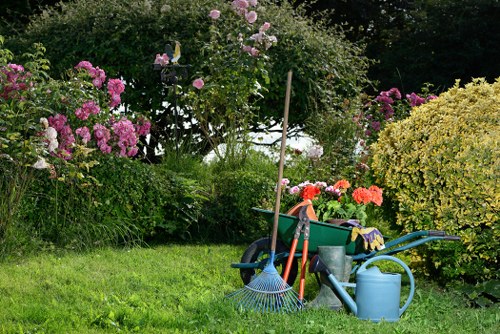 Landscaping Stockwell operations must be carried out with a clear commitment to health and safety at every stage of work. This policy sets out the standards expected to protect employees, contractors, clients, visitors, and members of the public during all landscaping activities. Whether the task involves planting, turf care, pruning, digging, paving, or ongoing grounds maintenance, the same principle applies: hazards must be identified early and controlled effectively. A safe working culture supports quality results, reduces disruption, and ensures that all work is completed responsibly.
Our approach to landscape maintenance is based on planning, supervision, training, and proper use of equipment. Every member of the team is expected to understand their responsibilities and follow safe systems of work. Risk assessments are completed before work begins, and method statements are used where tasks involve elevated risk. These measures help ensure that landscaping work is organised carefully, with attention given to ground conditions, tools, machinery, manual handling, and the presence of other people nearby.
Health and safety is not treated as an extra requirement; it is a core part of professional practice. In practical terms, this means that workers should always remain alert to changing conditions, including wet surfaces, uneven ground, hidden debris, overhead obstructions, and weather-related risks. Good housekeeping is essential, and work areas must be kept as tidy and orderly as possible. Safe landscaping depends on consistent discipline, good communication, and immediate action when a hazard is noticed.
 The company will provide appropriate information, instruction, and supervision so that staff can work safely and confidently. Training includes the correct use of hand tools, power tools, lifting techniques, personal protective equipment, and safe movement around vehicles and machinery. Workers must only operate equipment they are trained and authorised to use. Any defect, fault, or unsafe condition must be reported at once and equipment must be removed from service until it has been checked and declared safe.
Personal protective equipment, or PPE, must be worn where required and kept in suitable condition. Depending on the task, this may include gloves, eye protection, hearing protection, high-visibility clothing, safety footwear, or dust masks. PPE does not replace good working practice, but it provides an additional layer of protection. For garden maintenance teams, correct clothing and footwear are particularly important because work often takes place on damp, slippery, or uneven surfaces.
Manual handling is a regular part of landscaping work, so lifting and carrying should be approached carefully. Heavy loads, awkward shapes, and repetitive movements can all cause strain or injury. Tasks should be planned so that mechanical aids are used where possible and lifting is shared between team members when appropriate. Workers are expected to assess the weight, shape, and route of any load before moving it. In the middle of a busy site, clear pathways and effective communication are essential for preventing accidents.
 Plant, machinery, and chemicals must be used with particular care. Cutting equipment, mowers, trimmers, cultivators, and other powered tools can cause serious harm if handled incorrectly. Operators must check tools before use, follow manufacturer instructions, and keep guards and safety features in place. Refuelling must be carried out safely, with engines switched off and ignition risks controlled. Where fertilisers, weed treatments, or other substances are used, they must be stored, labelled, and handled in accordance with the relevant safety information. Responsible grounds work means limiting exposure and preventing contamination of soil, water, and surrounding areas.
Protecting the public and other site users is also an important part of this policy. Work zones should be identified clearly, and access should be restricted where needed using barriers, signs, or temporary controls. Machinery should never be left unattended in an unsafe state. If work takes place in shared spaces, operatives must keep alert to pedestrians, children, pets, vehicles, and cyclists. Good communication between team members helps avoid confusion, while visible supervision supports safer decision-making throughout the task.
Emergency preparedness is an important aspect of safe landscaping services. First aid provision must be suitable for the type and scale of work being carried out. All workers should know what to do in the event of an accident, injury, fire, spill, or equipment failure. Emergency procedures must be easy to follow, and incidents should be reported promptly so that lessons can be learned. Any near miss should be reviewed seriously, because it often reveals a weakness in controls that needs to be addressed before harm occurs.
The company expects everyone involved in landscaping work to cooperate with health and safety arrangements and to raise concerns without delay. Managers are responsible for monitoring compliance, reviewing risk assessments, and making sure that work is properly resourced. Workers are responsible for following instructions, looking after equipment, and using common sense in changing conditions. A positive safety culture depends on honesty, accountability, and the willingness to stop work if something does not seem safe.
Regular inspection and maintenance support the safe delivery of landscaping projects. Tools, plant, ladders, and access equipment must be checked routinely and serviced when required. Worksites should also be reviewed for hidden risks such as unstable structures, buried services, trip hazards, or unsafe slopes. Preventive maintenance reduces breakdowns and helps avoid delays, while careful site checks lower the chance of injury. Strong organisation is especially valuable when several tasks are taking place at the same time.
 This policy will be reviewed periodically and updated whenever work methods, equipment, or risk conditions change. The aim is to maintain a practical and effective framework for safe work across all landscaping operations. By following these standards, landscape contractors can protect people, preserve quality, and deliver reliable results with professionalism and care.
 In every project, from routine maintenance to more complex outdoor works, safety remains the foundation of good practice. A careful and consistent approach helps prevent harm, supports compliance with internal standards, and ensures that each job is completed with the wellbeing of everyone involved in mind.